
• Home
  • About
  • Locations
  • Contact Us
logologologologo
  • Plan
    • AI Governance & Risk Management
    • Acquisition & VC
    • vCISO
    • Policies & Procedures
    • Strategy & Security Program Creation
    • Risk Management
  • Attack
    • Penetration Testing
    • AI Penetration Testing
    • Mobile Application Penetration Testing
    • Red Teaming
    • Web Application Penetration Testing
    • PTaaS
    • IOT Penetration Testing
  • Defend
    • Office 365 Security
    • HIPAA Compliance
    • PCI Compliance
    • Code Reviews
    • Blockchain Security Analysis
    • Vulnerability Assessments
  • Recover
    • Ransomware Recovery
    • Expert Witness
    • Forensics
  • Learn
    • Resources
    • Penetration Testing Training
    • Blog
  • Tools
    • Wp2shell Checker
    • php2shell checker
  • Instant Quote
✕

Warning: Fake Job Interview Led to Binance Heist

November 3, 2026
Written By: author avatar James Knight
author avatar James Knight
James Knight is a well-known cybersecurity expert, international keynote speaker, and Senior Principal at Digital Warfare, a global cybersecurity consulting firm headquartered in McLean, Virginia, USA. Digital Warfare provides penetration testing, red teaming, vCISO, and many other services to enterprise organizations and government entities globally and across the United States. With over 25 years of hands-on experience at the intersection of offensive security and real-world threat intelligence, James has conducted pen tests, security assessments, vulnerability research, and adversarial analysis for corporate enterprises and government clients spanning financial services, critical infrastructure, and defense-adjacent sectors. His work covers the full spectrum of modern enterprise threats including advanced persistent threat campaigns, ransomware group tradecraft, supply chain compromise, AI-augmented attack techniques, and zero-day vulnerability exploitation. James is a recognized and frequently cited voice on cybersecurity in both specialist and mainstream media. Many well-known news sites, including The Daily Mail, have quoted him on many occasions: on ransomware payment policy in the context of the Colonial Pipeline attack, on how agentic AI is expected to reshape cyber warfare over the next 25 years, and on the security implications of the latest OpenAI security incident. His analysis has also been cited on Medium, where independent cybersecurity researchers have quoted his insights on supply chain security and AI-driven attack techniques. On supply chain risk, James has described the threat in terms that practitioners recognize immediately: supply chain attacks exploit the trust organizations place in third parties, requiring defenders to map every dependency like a battlefield and probe for weaknesses that could cascade across entire networks. On AI-driven attacks, his assessment reflects the same operational directness: AI-powered attacks exploit the enterprise fascination with new technology, requiring penetration testers to treat every unverified component as a potential payload delivery mechanism. His firm has been featured as a cybersecurity resource in FinancialContent and referenced across multiple professional data platforms including ZoomInfo and Datanyze as a specialist cybersecurity consulting firm serving Fortune 500 and SME organizations. At Digital Warfare, James leads the team and authors the Digital Warfare Threat Intelligence blog, publishing daily analysis of confirmed cybersecurity incidents sourced exclusively from verified primary sources including CISA advisories, vendor security bulletins, and leading threat intelligence publications. His analysis is built for security practitioners and business leaders who need actionable intelligence rather than vendor marketing. His original research includes the Digital Warfare 2026 Mid-Year Threat Pattern Report, an analysis of 28 confirmed threat incidents tracked between January and August 2026 that introduced three named security frameworks now used by enterprise security teams. The Zero-Day Priority Framework establishes a tiered patching classification system grounded in confirmed 2026 exploitation data showing that 73 percent of zero-days are weaponized within 72 hours of public disclosure. The Supply Chain Attack Taxonomy defines three distinct classes of supply chain compromise, each requiring different defensive controls and monitoring approaches. The AI Augmentation Classification documents three confirmed maturity levels of AI-assisted attack capability observed in real-world 2026 incidents, from AI-generated custom malware at Level One through fully autonomous ransomware operations at Level Three. Digital Warfare was founded in 2012 and serves corporations and governmental entities seeking rigorous security assessment and strategic security leadership from practitioners with genuine operational experience. Every member of the firm’s elite team brings over 25 years of cybersecurity experience to every client engagement. Connect with James on LinkedIn or follow his threat intelligence updates at digitalwarfare.com/blog.
See Full Bio

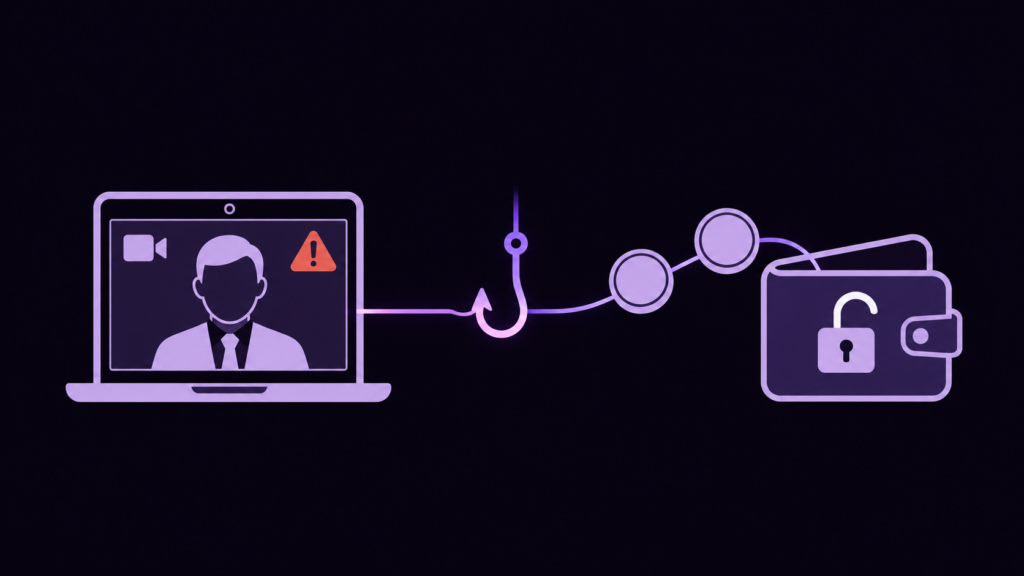
The Binance heist began with a fake job interview. North Korean hackers posed as recruiters, convinced a Binance engineer to download a malicious coding assignment, and used that foothold to steal about $6.34 billion on October 29, 2026. Treat any job offer that asks you to run code on a work computer as an attack.

What Happened in the Binance Heist?

Attackers moved funds across several blockchains through Binance’s wallet signing service, bypassing the normal withdrawal process. The FBI attributes the theft to North Korea, naming the state sponsored group TraderTraitor, which is also tracked as Lazarus Group, Jade Sleet and APT38. CISA documented the same group’s playbook against blockchain companies in advisory AA22-108A, years before this attack. Binance disclosed on November 3, 2026 that fake job interviews started the intrusion.

How Did the Fake Job Interview Work?

A person posing as a Project Director at a fictitious company contacted a software engineer on a legitimate job platform. The engineer’s profile mentioned past Binance experience, which made the target worth the effort. Two interviews followed:

  • Interview one: a fake HR representative held a live video call and shared a social media account filled with personal photos and videos to build trust
  • Interview two: on a chat app, the interviewer told the engineer to download a coding assignment from an online code repository

The assignment installed previously unseen custom malware that antivirus tools did not detect. It replaced the legitimate pyenv executable in the macOS Homebrew directory with a malicious version that ran commands from an attacker controlled server. The engineer ran it on a work computer, and that decision opened the door to everything that followed.

How Did One Engineer Lead to the Binance Heist?

By October 20, 2026, the attackers had used the compromised computer and an internal AI tool to take over two more engineers who worked on wallet infrastructure. They stole credentials and a container deployment token. Nine days later, on October 29, they used those credentials to deploy a malicious script, reach the wallet signing service and move funds across multiple blockchains within minutes.

  1. An attacker poses as a recruiter and contacts an engineer
  2. The engineer runs a malicious coding assignment on a work computer
  3. Custom malware evades antivirus and gives the attacker control
  4. The attacker abuses an internal AI tool to compromise two more engineers
  5. The attacker steals credentials and a container deployment token
  6. The attacker deploys a malicious script and reaches the wallet signing service
  7. Funds move across several blockchains before anyone stops the transfers
Binance heist attack chain diagram showing how a fake job interview led to the $6.34 billion theft
The Binance heist attack chain, step by step.

Why Did EIP-7702 Let the Attack Continue After Withdrawals Stopped?

Binance suspended withdrawals, but the attackers had already abused Ethereum’s EIP-7702 feature. EIP-7702 lets a wallet delegate control to contract code, so the attackers kept stealing through on chain delegation even though Binance had closed the normal withdrawal path. The lesson for defenders is plain. Halting transfers does not remove an attacker’s access, so incident response must revoke access and rotate keys as separate steps.

How Much Did Binance Lose and Recover?

Binance puts the impacted value at about $6.34 billion. As of November 3, 2026, about $2.85 billion in stolen assets was frozen or intercepted. Binance says it replaced 98 percent of the impacted token assets by October 31. That figure covers impacted tokens, and neither source states what share of the total theft it represents. The FBI says the attackers are mainly converting the stolen funds to Ethereum and expects more laundering through DeFi and swap services.

Is the Binance Heist Part of a Larger North Korean Pattern?

Yes. Binance says the tactics closely mirror two known North Korean campaigns, Contagious Interview and Operation Dream Job. Both use fake recruiters and fake hiring tests to get malware onto developer machines. The target changed, but the method did not. Attackers go after people with access, and engineers who hold keys and tokens make the best targets.

How Can Companies Prevent a Fake Job Interview Attack?

  • Ban take home coding tasks on work computers and use a separate device for interviews and assignments
  • Tell every engineer that a recruiter who asks them to run code is a threat, however real the profile looks
  • Keep deployment tokens and signing credentials off laptops
  • Limit what internal AI tools can access, because attackers used one to move between engineers
  • Monitor changes to account permissions and delegation, not only outgoing transfers
  • Scan developer devices for tampered tools, such as replaced package manager files and unexpected shell launches
  • Revoke access and rotate keys as two separate steps during an incident

Binance rebuilt its wallet system and AI tool after the attack, replaced devices, removed engineers’ credentials, scanned employee devices and brought in independent security firms.

Fake job interview red flags that match the Binance heist attack
Warning signs of a fake job interview attack, based on the Binance heist.

What Should Security Teams Do After the Binance Heist?

Test the human path into your systems, not just the network. Our team runs penetration testing and vulnerability assessments that show how far an attacker gets once one engineer’s computer falls, and our PTaaS platform keeps that testing running between audits. Our 2026 Mid Year Threat Pattern Report shows how quickly attackers turn a new foothold into damage.

Key Takeaways

  • The Binance heist stole about $6.34 billion on October 29, 2026, and it began with a fake job interview
  • The FBI attributes the attack to the North Korean group TraderTraitor
  • A malicious coding assignment gave attackers a foothold, and an internal AI tool and a deployment token spread it
  • Binance reports $2.85 billion frozen or intercepted and 98 percent of impacted tokens replaced
  • Never run recruiter supplied code on a work computer

Frequently Asked Questions About the Binance Heist

What was the Binance heist?

The Binance heist was a theft of about $6.34 billion in digital assets on October 29, 2026. Attackers reached Binance’s wallet signing service after compromising engineers through a fake job interview.

Who did the Binance heist?

The FBI attributes the attack to TraderTraitor, a North Korean state sponsored group also tracked as Lazarus Group, Jade Sleet and APT38. Binance says the tactics mirror the Contagious Interview and Operation Dream Job campaigns.

How did a fake job interview lead to the Binance heist?

A fake Project Director contacted a Binance engineer on a job platform and ran two interviews. The engineer then downloaded a coding assignment that installed custom malware. Attackers used that computer to reach more engineers and a deployment token.

How much money did Binance recover?

As of November 3, 2026, about $2.85 billion in stolen assets was frozen or intercepted. Binance also says it replaced 98 percent of the impacted token assets by October 31.

How can companies stop fake job interview attacks?

Ban take home coding tasks on work computers, use separate devices for interviews, keep deployment tokens off laptops, limit what internal AI tools can reach, and watch for permission changes as closely as transfers.

What is EIP-7702 and why did it matter?

EIP-7702 is an Ethereum feature that lets a wallet delegate control to contract code. Attackers abused it to keep stealing after Binance suspended withdrawals.

author avatar
James Knight Senior Principal, and lead threat intelligence analyst
James Knight is a well-known cybersecurity expert, international keynote speaker, and Senior Principal at Digital Warfare, a global cybersecurity consulting firm headquartered in McLean, Virginia, USA. Digital Warfare provides penetration testing, red teaming, vCISO, and many other services to enterprise organizations and government entities globally and across the United States. With over 25 years of hands-on experience at the intersection of offensive security and real-world threat intelligence, James has conducted pen tests, security assessments, vulnerability research, and adversarial analysis for corporate enterprises and government clients spanning financial services, critical infrastructure, and defense-adjacent sectors. His work covers the full spectrum of modern enterprise threats including advanced persistent threat campaigns, ransomware group tradecraft, supply chain compromise, AI-augmented attack techniques, and zero-day vulnerability exploitation. James is a recognized and frequently cited voice on cybersecurity in both specialist and mainstream media. Many well-known news sites, including The Daily Mail, have quoted him on many occasions: on ransomware payment policy in the context of the Colonial Pipeline attack, on how agentic AI is expected to reshape cyber warfare over the next 25 years, and on the security implications of the latest OpenAI security incident. His analysis has also been cited on Medium, where independent cybersecurity researchers have quoted his insights on supply chain security and AI-driven attack techniques. On supply chain risk, James has described the threat in terms that practitioners recognize immediately: supply chain attacks exploit the trust organizations place in third parties, requiring defenders to map every dependency like a battlefield and probe for weaknesses that could cascade across entire networks. On AI-driven attacks, his assessment reflects the same operational directness: AI-powered attacks exploit the enterprise fascination with new technology, requiring penetration testers to treat every unverified component as a potential payload delivery mechanism. His firm has been featured as a cybersecurity resource in FinancialContent and referenced across multiple professional data platforms including ZoomInfo and Datanyze as a specialist cybersecurity consulting firm serving Fortune 500 and SME organizations. At Digital Warfare, James leads the team and authors the Digital Warfare Threat Intelligence blog, publishing daily analysis of confirmed cybersecurity incidents sourced exclusively from verified primary sources including CISA advisories, vendor security bulletins, and leading threat intelligence publications. His analysis is built for security practitioners and business leaders who need actionable intelligence rather than vendor marketing. His original research includes the Digital Warfare 2026 Mid-Year Threat Pattern Report, an analysis of 28 confirmed threat incidents tracked between January and August 2026 that introduced three named security frameworks now used by enterprise security teams. The Zero-Day Priority Framework establishes a tiered patching classification system grounded in confirmed 2026 exploitation data showing that 73 percent of zero-days are weaponized within 72 hours of public disclosure. The Supply Chain Attack Taxonomy defines three distinct classes of supply chain compromise, each requiring different defensive controls and monitoring approaches. The AI Augmentation Classification documents three confirmed maturity levels of AI-assisted attack capability observed in real-world 2026 incidents, from AI-generated custom malware at Level One through fully autonomous ransomware operations at Level Three. Digital Warfare was founded in 2012 and serves corporations and governmental entities seeking rigorous security assessment and strategic security leadership from practitioners with genuine operational experience. Every member of the firm's elite team brings over 25 years of cybersecurity experience to every client engagement. Connect with James on LinkedIn or follow his threat intelligence updates at digitalwarfare.com/blog.
See Full Bio
Penetration Testing Ransomware Incident Response Threat Intelligence Zero-Day Vulnerability Research
social network icon social network icon
Share
Copyright © Digital Warfare. All rights reserved.
  • Home
  • About
  • Locations
  • Contact Us