James Knight is a well-known cybersecurity expert, international keynote speaker, and Senior Principal at Digital Warfare, a global cybersecurity consulting firm headquartered in McLean, Virginia, USA. Digital Warfare provides penetration testing, red teaming, vCISO, and many other services to enterprise organizations and government entities globally and across the United States.
With over 25 years of hands-on experience at the intersection of offensive security and real-world threat intelligence, James has conducted pen tests, security assessments, vulnerability research, and adversarial analysis for corporate enterprises and government clients spanning financial services, critical infrastructure, and defense-adjacent sectors. His work covers the full spectrum of modern enterprise threats including advanced persistent threat campaigns, ransomware group tradecraft, supply chain compromise, AI-augmented attack techniques, and zero-day vulnerability exploitation.
James is a recognized and frequently cited voice on cybersecurity in both specialist and mainstream media. Many well-known news sites, including The Daily Mail, have quoted him on many occasions: on ransomware payment policy in the context of the Colonial Pipeline attack, on how agentic AI is expected to reshape cyber warfare over the next 25 years, and on the security implications of the latest OpenAI security incident. His analysis has also been cited on Medium, where independent cybersecurity researchers have quoted his insights on supply chain security and AI-driven attack techniques. On supply chain risk, James has described the threat in terms that practitioners recognize immediately: supply chain attacks exploit the trust organizations place in third parties, requiring defenders to map every dependency like a battlefield and probe for weaknesses that could cascade across entire networks. On AI-driven attacks, his assessment reflects the same operational directness: AI-powered attacks exploit the enterprise fascination with new technology, requiring penetration testers to treat every unverified component as a potential payload delivery mechanism. His firm has been featured as a cybersecurity resource in
FinancialContent and referenced across multiple professional data platforms including ZoomInfo and Datanyze as a specialist cybersecurity consulting firm serving Fortune 500 and SME organizations.
At Digital Warfare, James leads the team and authors the Digital Warfare Threat Intelligence blog, publishing daily analysis of confirmed cybersecurity incidents sourced exclusively from verified primary sources including CISA advisories, vendor security bulletins, and leading threat intelligence publications. His analysis is built for security practitioners and business leaders who need actionable intelligence rather than vendor marketing.
His original research includes the Digital Warfare 2026 Mid-Year Threat Pattern Report, an analysis of 28 confirmed threat incidents tracked between January and August 2026 that introduced three named security frameworks now used by enterprise security teams. The Zero-Day Priority Framework establishes a tiered patching classification system grounded in confirmed 2026 exploitation data showing that 73 percent of zero-days are weaponized within 72 hours of public disclosure. The Supply Chain Attack Taxonomy defines three distinct classes of supply chain compromise, each requiring different defensive controls and monitoring approaches. The AI Augmentation Classification documents three confirmed maturity levels of AI-assisted attack capability observed in real-world 2026 incidents, from AI-generated custom malware at Level One through fully autonomous ransomware operations at Level Three.
Digital Warfare was founded in 2012 and serves corporations and governmental entities seeking rigorous security assessment and strategic security leadership from practitioners with genuine operational experience. Every member of the firm’s elite team brings over 25 years of cybersecurity experience to every client engagement.
Connect with James on
LinkedIn or follow his threat intelligence updates at
digitalwarfare.com/blog.
The SonicWall SSL VPN vulnerability CVE-2026-19868 lets an attacker with valid credentials for an alternate login method skip SAML authentication and its multi factor check. SonicWall published the fix on November 6, 2026, and CISA added the flaw to its Known Exploited Vulnerabilities catalog the same day. Upgrade to SonicOS 7.3.4-7013 or 8.2.3-8015.
What Is the SonicWall SSL VPN Vulnerability CVE-2026-19868?
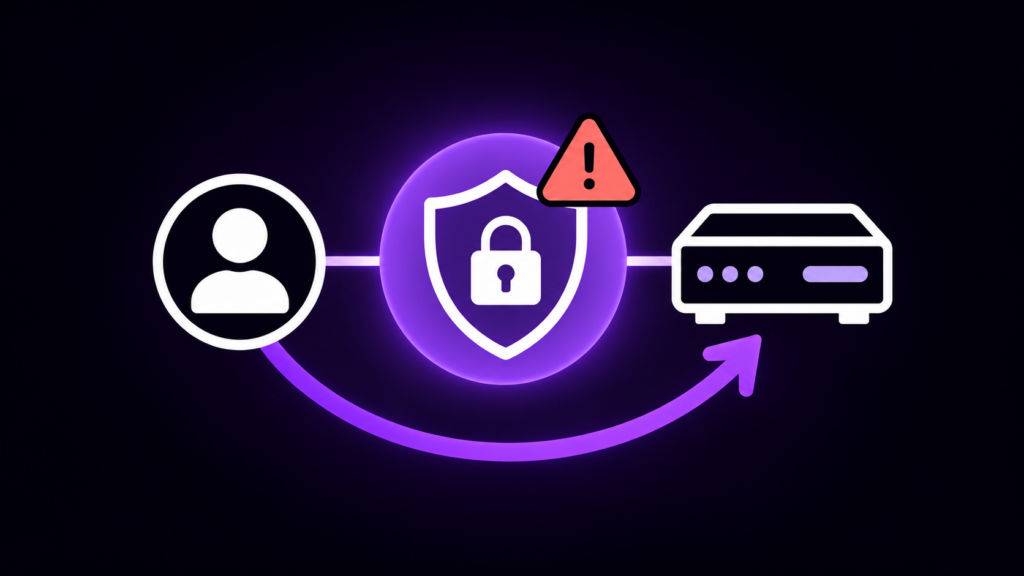
CVE-2026-19868 is an authentication enforcement flaw in the SonicOS SSL VPN service. When an administrator turns on SAML for VPN logins, every user is supposed to pass through the identity provider and its multi factor check. This flaw breaks that rule. An account that can also sign in by another method can log in with that method and skip SAML completely.
SonicWall classifies the weakness as CWE-308, use of single factor authentication. The attacker still needs a valid password, so this is an MFA bypass and not open access to the firewall. A stolen or guessed password becomes enough, and passwords leak constantly.
Which SonicOS Versions Does the SonicWall SSL VPN Vulnerability Affect?
Check three conditions. Your firewall must run an affected build, the SSL VPN service must be reachable, and you must have SAML turned on for SSL VPN logins. SonicWall states the flaw affects the SSL VPN only when SAML login is on.
| Platform | Affected versions | Fixed versions |
|---|
| SonicOS Gen7 (TZ, NSa, NSsp, NSv) | 7.3.3-7015 and earlier | 7.3.4-7013 |
| SonicOS Gen8 (TZ, NSa, NSv) | 8.2.2-8015 and earlier | 8.2.3-8015 |
Virtual NSv appliances deserve extra care. Restoring an old configuration onto an old image brings the flaw back, so confirm the image itself runs the fixed build.
How Does the SAML MFA Bypass Work?
SonicOS SSL VPN supports more than one authentication method. The gateway accepts valid credentials from the alternate method as enough and never applies the SAML check, so the SAML assertion and the identity provider’s MFA never run. Researchers at Ostorlab walked through the SAML policy bypass in CVE-2026-19868 and note that the exact code path and request sequence are not public.
Ryan Harris of The Electronic Office reported the flaw to SonicWall, which tracks it in advisory SNWLID-2026-0014.
Is Anyone Exploiting CVE-2026-19868?
SonicWall’s product security team investigated a report of potential exploitation, and CISA added the flaw to the Known Exploited Vulnerabilities catalog on November 6, 2026. Federal agencies must remediate by November 20, 2026. As SecurityWeek reported, neither SonicWall nor CISA has shared details of the attacks, and it remains unclear whether attackers used the flaw before the patch existed.
Treat that gap carefully. A KEV listing means CISA has evidence of exploitation, but no public indicators of compromise exist yet. Absence of indicators does not prove your firewall is clean.
Why Does the Score Show 7.5 and 7.1?
CISA rates the flaw 7.5 High on CVSS 3.1 and records that the attacker needs no privileges. SonicWall rates it 7.1 High and records low privileges, because the attacker needs a valid account. Both agree on high confidentiality impact, low integrity impact and no availability impact. Your patch priority should follow the KEV listing and your VPN exposure, not the gap between the two numbers.
What Else Did the November SonicWall Advisory Fix?
Advisory SNWLID-2026-0014 covers seven SonicOS vulnerabilities. SonicWall did not flag the other six as exploited, but they justify the same upgrade:
- Two flaws rated 8.8 in the management interface, a permissive cross domain policy and a session validation bug, that a remote attacker could abuse without logging in under certain conditions
- Three pre authentication buffer overflows in the SSL VPN service and the TACACS+ client that could cause application level denial of service
- One weak password hashing flaw in virtual appliances that could expose a platform credential to an attacker with high privileged local access
How Do You Check Whether Someone Bypassed Your VPN Login?
No indicators of compromise exist yet, so hunt for behavior. Start with these checks:
- Authentication method: look for successful SSL VPN logins by SAML only accounts that record a non SAML method. This works only if your logs capture the method
- Source and timing: flag logins from new addresses, odd hours or unusual countries
- Reach: look for VPN sessions that touch internal hosts the account never uses
- Account changes: check for new local accounts, newly enabled alternate methods and new SSL VPN authorizations
If your logs omit the authentication method, you cannot confirm or rule this pattern out. In that case, reset the account credentials, review what each session reached, and rebuild the device from a known good configuration when you suspect it.
How Do You Fix the SonicWall SSL VPN Vulnerability?
SonicWall lists no workaround, so the upgrade is the fix. Work through these steps in order:
- Record the current firmware version and back up the configuration
- Upgrade Gen7 devices to SonicOS 7.3.4-7013 or later and Gen8 devices to 8.2.3-8015 or later
- Confirm NSv appliances run a rebuilt or upgraded image
- Restrict SSL VPN access to trusted source addresses until the upgrade finishes
- Remove SSL VPN access for accounts that can use a non SAML method, and keep an admin path that does not depend on the VPN
- Reset credentials for any account that shows suspicious logins
The interim steps reduce exposure but do not fix the flaw. Only the upgrade closes it.
What Should Security Teams Do Next?
VPN gateways sit at the edge, so attackers reach them first. Our 2026 Mid Year Threat Pattern Report found that attackers weaponized eight of eleven zero days, 73 percent, within 72 hours of disclosure. A patch window measured in weeks does not keep up with that pace.
Do not assume the upgrade finished the job. Our team runs penetration testing and vulnerability assessments that test whether attackers can still reach your VPN, and our PTaaS platform keeps that testing running between audits.
Key Takeaways
- CVE-2026-19868 lets an attacker with valid credentials skip SAML and its MFA on the SonicOS SSL VPN
- Only firewalls with SAML enabled for SSL VPN logins carry the exposure
- Upgrade to SonicOS 7.3.4-7013 or 8.2.3-8015, because no workaround exists
- CISA added the flaw to its KEV catalog on November 6, 2026, with a November 20 federal deadline
- No indicators of compromise exist yet, so hunt for non SAML logins by SAML only accounts
Frequently Asked Questions About the SonicWall SSL VPN Vulnerability
What is the SonicWall SSL VPN vulnerability CVE-2026-19868?
CVE-2026-19868 is an authentication enforcement flaw in the SonicOS SSL VPN service. An attacker with valid credentials for an alternate login method can bypass SAML authentication controls and the SAML enforced multi factor check.
Which SonicOS versions does CVE-2026-19868 affect?
Gen7 firmware at 7.3.3-7015 and earlier, and Gen8 firmware at 8.2.2-8015 and earlier. The flaw exposes the SSL VPN service only when you turn on SAML login.
Which SonicOS versions fix CVE-2026-19868?
SonicWall fixed the flaw in SonicOS 7.3.4-7013 for Gen7 and 8.2.3-8015 for Gen8. SonicWall lists no workaround, so upgrading is the only vendor fix.
Are attackers exploiting CVE-2026-19868?
CISA added CVE-2026-19868 to its Known Exploited Vulnerabilities catalog on November 6, 2026, and SonicWall investigated a report of potential exploitation. Neither has published attack details yet.
Does CVE-2026-19868 let anyone log in without a password?
No. The attacker needs a valid password for an account that can use an alternate authentication method. The flaw removes the SAML and MFA step for that account. It does not grant access without credentials.
What is the CVSS score for CVE-2026-19868?
CISA scores it 7.5 High on CVSS 3.1, while SonicWall rates it 7.1 High. The two differ on the privileges an attacker needs.
James Knight is a well-known cybersecurity expert, international keynote speaker, and Senior Principal at Digital Warfare, a global cybersecurity consulting firm headquartered in McLean, Virginia, USA. Digital Warfare provides penetration testing, red teaming, vCISO, and many other services to enterprise organizations and government entities globally and across the United States.
With over 25 years of hands-on experience at the intersection of offensive security and real-world threat intelligence, James has conducted pen tests, security assessments, vulnerability research, and adversarial analysis for corporate enterprises and government clients spanning financial services, critical infrastructure, and defense-adjacent sectors. His work covers the full spectrum of modern enterprise threats including advanced persistent threat campaigns, ransomware group tradecraft, supply chain compromise, AI-augmented attack techniques, and zero-day vulnerability exploitation.
James is a recognized and frequently cited voice on cybersecurity in both specialist and mainstream media. Many well-known news sites, including The Daily Mail, have quoted him on many occasions: on ransomware payment policy in the context of the Colonial Pipeline attack, on how agentic AI is expected to reshape cyber warfare over the next 25 years, and on the security implications of the latest OpenAI security incident. His analysis has also been cited on Medium, where independent cybersecurity researchers have quoted his insights on supply chain security and AI-driven attack techniques. On supply chain risk, James has described the threat in terms that practitioners recognize immediately: supply chain attacks exploit the trust organizations place in third parties, requiring defenders to map every dependency like a battlefield and probe for weaknesses that could cascade across entire networks. On AI-driven attacks, his assessment reflects the same operational directness: AI-powered attacks exploit the enterprise fascination with new technology, requiring penetration testers to treat every unverified component as a potential payload delivery mechanism. His firm has been featured as a cybersecurity resource in
FinancialContent and referenced across multiple professional data platforms including ZoomInfo and Datanyze as a specialist cybersecurity consulting firm serving Fortune 500 and SME organizations.
At Digital Warfare, James leads the team and authors the Digital Warfare Threat Intelligence blog, publishing daily analysis of confirmed cybersecurity incidents sourced exclusively from verified primary sources including CISA advisories, vendor security bulletins, and leading threat intelligence publications. His analysis is built for security practitioners and business leaders who need actionable intelligence rather than vendor marketing.
His original research includes the Digital Warfare 2026 Mid-Year Threat Pattern Report, an analysis of 28 confirmed threat incidents tracked between January and August 2026 that introduced three named security frameworks now used by enterprise security teams. The Zero-Day Priority Framework establishes a tiered patching classification system grounded in confirmed 2026 exploitation data showing that 73 percent of zero-days are weaponized within 72 hours of public disclosure. The Supply Chain Attack Taxonomy defines three distinct classes of supply chain compromise, each requiring different defensive controls and monitoring approaches. The AI Augmentation Classification documents three confirmed maturity levels of AI-assisted attack capability observed in real-world 2026 incidents, from AI-generated custom malware at Level One through fully autonomous ransomware operations at Level Three.
Digital Warfare was founded in 2012 and serves corporations and governmental entities seeking rigorous security assessment and strategic security leadership from practitioners with genuine operational experience. Every member of the firm's elite team brings over 25 years of cybersecurity experience to every client engagement.
Connect with James on
LinkedIn or follow his threat intelligence updates at
digitalwarfare.com/blog.