
AI Penetration Testing
Manual, exploit-driven AI penetration testing services designed to validate how real attackers break AI systems - before it turns into financial exposure, data leakage, or operational risk.
Digital Warfare delivers comprehensive AI security testing across LLMs, agentic AI systems, ML models, APIs, and real-world deployments, combining:
- Manual testing by elite white-hat hackers (25+ years experience each)
- Advanced adversary techniques
- Our proprietary xHacker.AI Agentic AI Hacking Engine
All testing is conducted in client-approved, isolated environments with strict Rules of Engagement.
AI systems expand your attack surface faster than most security programs can adapt - across prompts, memory, agents, retrieval pipelines, APIs, and autonomous workflows.
Validate real-world AI exploit paths before they become data leaks, contract risk, regulatory exposure, or expensive incident response.
NDA-friendly. Controlled environments only. Clear scope. Safe testing windows.

Our Pen Testers & Auditors
Have Been Featured in...
Logos are trademarks of their respective owners. No endorsement implied.
Business Impact
Validate real-world AI exploit paths and prioritize fixes that reduce financial exposure, contract risk, and costly incident response - before vulnerabilities are weaponized.

Reduce Incident Cost:
Identify AI-specific exploit paths before they trigger data breaches, regulatory exposure, or emergency remediation spend

Protect Revenue and Contracts:
Prevent AI-driven data leakage, prompt injection abuse, and automation misuse that can damage customer trust and enterprise agreements

Lower Downtime Risk:
Validate weaknesses in AI workflows that could lead to system manipulation, service disruption, or uncontrolled automation behaviors
Our Team Has Discovered
Bug Bounty Vulnerabilities in...
Responsible disclosure / bug bounty findings. No affiliation implied.
AI Systems Introduce New Attack Surfaces Most Security Programs Miss
AI systems are not just software - they are decision engines with dynamic behavior, memory, and external integrations.
Traditional testing fails because it does not account for:
- Prompt manipulation and instruction override
- Memory persistence across sessions
- AI-generated output triggering downstream exploits
- Autonomous agent behavior across tools and APIs
- Retrieval pipelines (RAG) exposing sensitive data
- Model abuse at scale (cost, compute, automation)
Unvalidated AI systems create high-risk scenarios:
- Sensitive data exposure through LLM queries
- Unauthorized actions via agentic workflows
- Model manipulation or poisoning
- Financial loss through automation abuse
- Reputational damage through misinformation
Without real testing, organizations are relying on assumptions - and attackers are not.

What Is AI Penetration Testing
AI penetration testing is a manual, adversary-driven assessment of AI systems, models, and integrations to identify exploitable vulnerabilities and validate real-world impact.
Unlike automated AI scans, this approach:
- Confirms exploitability, not just theoretical risk
- Tests real-world attacker behavior against AI systems
- Evaluates LLMs, APIs, agents, and workflows together
- Simulates prompt attacks, abuse cases, and chaining scenarios
- Produces evidence-based findings with prioritized remediation
This is enterprise-grade AI security testing for organizations deploying AI in production environments.
Why Traditional Testing Misses AI Risk
Traditional penetration testing often focuses on the application shell, APIs, and infrastructure. AI systems introduce additional attack paths across prompt handling, memory, retrieval logic, tool use, autonomous actions, model behavior, and unsafe downstream output handling. These risks are dynamic, stateful, and highly contextual, which is why they require manual, adversary-driven testing specifically designed for AI-enabled systems.
What We Test - Comprehensive AI Security Coverage
Digital Warfare tests AI systems as integrated, real-world environments - not isolated models. All testing is performed manually by senior white-hat penetration testers, enhanced by our proprietary xHacker.AI Agentic AI Hacking Engine
All meaningful findings are manually validated by senior testers to confirm real exploitability, business impact, and remediation priority.
Core AI Security Testing Areas
Our testing aligns with the OWASP Top 10 for LLM Applications, while extending coverage into agentic abuse, runtime exploitation, model misuse, retrieval attacks, and deployment-level weaknesses commonly missed by generic assessments.

Prompt Injection:
Instruction override, jailbreak techniques, and behavioral manipulation

Memory Poisoning:
Persistent context manipulation and cross-session contamination

Permissions & Access Controls:
Isolation failures, role bypass, and privilege escalation

Sensitive Information Disclosure:
PII extraction, system prompt leakage, and data exfiltration

Insecure Output Handling:
XSS, injection risks, and unsafe downstream execution

Training Data / Model Poisoning:
Backdoors, dataset compromise, and fine-tuning abuse

Unbounded Consumption:
Token abuse, cost amplification, and denial-of-wallet

Supply Chain Vulnerabilities:
Third-party model, dataset, and dependency risks

Excessive Agency (Agentic AI):
Unauthorized tool use and autonomous abuse

Vector / RAG Weaknesses:
Retrieval manipulation and context poisoning

Adversarial Robustness / Evasion Attacks:
Evasion techniques and safety bypass

Model Theft / Extraction:
Model replication, inversion, and inference attacks

Runtime Monitoring & Anomaly Detection:
Drift detection and alerting validation

Sandboxing, Isolation & Execution Controls:
Execution containment and boundary enforcement

Privacy & Side-Channel Testing:
Inference attacks and indirect data leakage

Misinformation & Hallucination Risk:
False outputs with operational and reputational impact
Direct AI Model Testing
We assess core model behavior independently of the surrounding application stack, validating how standalone inference endpoints, fine-tuned models, and model APIs respond to malicious inputs, boundary-testing prompts, abuse conditions, and adversarial interaction patterns. This helps identify risks that may never appear through frontend-only testing.
- Standalone LLM endpoints
- Fine-tuned models
- Foundation model behavior
- API-level interactions

Real-World AI Deployments We Test
We test AI in the environments where it creates real business risk - across customer-facing systems, internal workflows, SaaS platforms, agentic automation, and retrieval-enabled deployments.

AI chatbots and plugins:
Tool-calling abuse, prompt injection, unsafe plugin actions, and hidden instruction leakage

Internal AI tools and assistants:
Employee copilots, document analysis tools, knowledge assistants, and workflow automation with permission boundary testing

SaaS AI platforms:
Multi-tenant AI features, recommendation engines, analytics assistants, and connected workflow abuse paths

Website-integrated AI features:
Customer support chatbots, AI search, content assistants, and user-facing generative features

Enterprise agentic systems:
Autonomous decision agents, multi-step tool orchestration, privilege misuse, and unsafe action chaining

Custom RAG pipelines:
Retrieval manipulation, poisoned context injection, document abuse, and sensitive knowledge exposure

Hybrid on-prem and cloud AI deployments:
Split-trust environments, containerized LLMs, internal data flows, and cross-boundary security weaknesses

Chained AI Attack Scenarios
Where authorized, we validate multi-step exploit paths, such as:
- Prompt injection - data exfiltration
- RAG poisoning - sensitive disclosure
- Agent abuse - unauthorized system actions
- Output injection - downstream compromise
- Model exploitation - API abuse
What We Don’t Do Without Explicit Authorization
To protect operations and keep expectations clear, we do not perform disruptive, destructive, or uncontrolled testing activities unless explicitly approved in the Rules of Engagement. This includes production-impacting abuse, unsafe autonomous action execution, destructive payloads, or uncontrolled testing against connected systems.
Client Testimonials

"Since 2019, Digital Warfare has been our preferred vendor to conduct external Pen Testing on our SaaS Platforms. Saul and James are a pleasure to work with; their expertise in the cybersecurity space is impressive and their level of customer service and flexibility is unmatched among vendors. They are attentive, responsive, and thorough in everything they do!"
- Nate Schlossberg, VP Engineering, Feedonomics / Big Commerce

"Digital Warfare has been a trusted partner in strengthening our cybersecurity posture through comprehensive and highly tailored penetration testing services. Their team goes beyond standard external testing by designing and executing advanced, scenario-based assessments, including targeted social engineering exercises, custom testing aligned to our internal application development, and validation of critical security controls across multiple layers of our environment ..."
Read More- Arie Farhy, SVP, Chief Information Security Officer, Amerant Bank

"Digital Warfare is far more than a technical vendor - it is a true extension of our team at the bank. Our partnership has been both energizing and inspiring. Their team consistently challenges us to grow, helping us uncover opportunities for improvement while also celebrating our achievements and strengths. They bring thoughtful insight, trusted guidance, and a commitment to continuous refinement through retesting. Over the many years we’ve worked together, Digital Warfare has become an indispensable partner. Their expertise doesn’t just support our work - it elevates it. Quite simply, I can’t imagine navigating this industry without their collaboration and unwavering dedication."
- Linda R. Foster Senior Vice President, Information Technology, S&T Bank

"I am so very appreciative of the work Digital Warfare did for us. I can’t say enough positive words about them."
- Jared Waldrop, APRP, SVP | Operations Officer | ISO, Troy Bank & Trust

"We first used another company that had great marketing, sales people, and all the awards. They told us we were fine and found nothing, which seemed suspicious but sounded that maybe we did well. Then someone who called themselves a "security researcher" reached out and showed us that we had a ton of holes in our web application and other areas. After wasting a ton of money on the first pen testing company (who would not refund our money), we asked around and the name Digital Warfare kept coming up as highly recommended. They found things that made us squirm but we are glad they found them before a bad guy did. We highly recommend this firm to anyone looking for the real deal."
- David Price, Delphinus Capital

"After reviewing different providers, we chosen Digital Warfare to perform penetration tests and Microsoft 365 security analysis. We couldn’t be happier with that decision! The job has been done in time and manner, including several calls to review results, re-tests, and monthly vulnerability checks. We have established a relationship where we have Digital Warfare as a key partner and our main security advisor. We plan to do more projects together."
- Juan Rosli, Director of Technology, Accial Capital

"Digital Warfare has been an essential partner in our security endeavors for the past 3 years. They are professional, knowledgeable, and above-all, excellent at what they do!"
- Thomas L Stanley, Principal Site Reliability Engineer, Technical Lead, Schedulicity.com
Deliverables
You receive clear, actionable documentation designed for both leadership decision-making and technical remediation.

Executive Risk Summary:
A high-level overview of key risk themes, business impact, and the most critical vulnerabilities, enabling leadership to quickly understand exposure and prioritize action

Scope and Testing Assumptions:
A clearly defined record of systems tested constraints, exclusions, and environmental conditions to ensure full transparency and alignment with the Rules of Engagement

Detailed Findings with Evidence:
Comprehensive documentation of each identified vulnerability, supported by validated evidence, including screenshots, logs, and attack traces demonstrating real-world exploitability

Reproduction Steps:
Step-by-step instructions enabling your technical teams to reliably reproduce each issue, validate risk, and support efficient remediation

Impact-Based Prioritization:
Each finding is ranked based on exploitability, likelihood, and business impact, helping teams focus on the issues that reduce risk fastest

Remediation Guidance:
Clear, practical recommendations tailored to your environment, designed to help engineering teams fix vulnerabilities without ambiguity or unnecessary rework

Validation
Recommendations:
Guidance on how to verify that fixes have been properly implemented and that vulnerabilities are fully resolved, reducing the risk of incomplete remediation

Debrief Session with Stakeholders:
A structured walkthrough of findings with your security and engineering teams, including Q&A, clarification of risks, and alignment on remediation priorities
Methodology and Process
A structured, controlled methodology ensures safe testing, accurate results, and meaningful risk reduction - without operational disruption.
Every engagement is led by senior white-hat penetration testers, combining manual adversary techniques with AI-enhanced coverage.
Scoping & AI Threat Modeling
Define AI systems, workflows, and attack surfaces.
Rules of Engagement (RoE)
Strict controls, safe testing, and approved environments.
Environment Preparation
Testing occurs in isolated, client-approved systems only.
Manual Testing & Exploit Validation
Real attacker techniques applied and validated.
AI-Assisted Attack Expansion
xHacker.AI enhances coverage and discovery.
Adversary Simulation
Real-world AI attack scenarios executed.
Reporting & Prioritization
Clear, actionable findings aligned to business impact.
Debrief & Retesting
Validation of fixes and improved security posture.
Human-Led, AI-Assisted Penetration Testing
Senior penetration testers perform the assessment while our proprietary xHacker.AI Agentic AI Hacking Engine enhances depth, accelerates discovery, and provides additional perspectives throughout the testing process.
Modern web applications have countless testing permutations and edge cases that must be manually assessed by experienced testers. xHacker.AI augments this process by helping to expand coverage and surface additional areas for review. Senior penetration testers execute test cases, confirm exploitability, document evidence, and deliver remediation recommendations. The result is broader coverage, deeper analysis, and practical guidance backed by human expertise and AI-assisted insight.
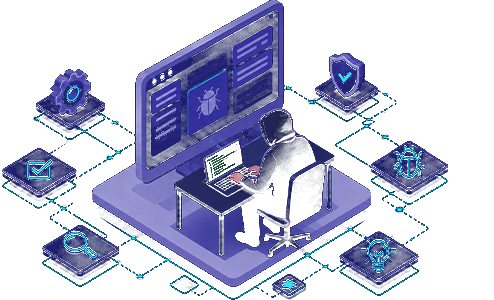
Why Manual Testing Is Non-Negotiable To Us
Senior testers execute every engagement. Human judgment, experience, and accountability are the foundation. Nothing replaces that.
Manual penetration testing remains critical because senior testers can:
- Understand business logic and application intent
- Validate real exploitability
- Reduce false positives
- Identify chained attack paths
- Confirm business impact
- Provide practical remediation guidance
We have earned trust across industries such as Health, Finance, and Tech by doing one thing consistently. Putting our best senior testers, each with 25+ years of experience, on every engagement, every time. xHacker.AI makes sure they go further.


Why AI Makes Our Testing Go Further
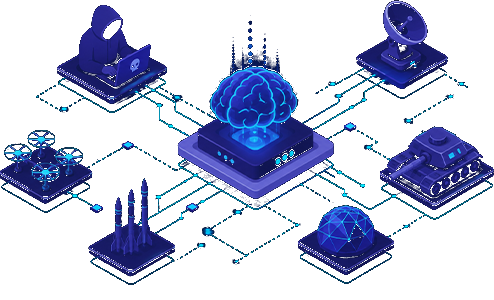
We use our proprietary xHacker.AI Agentic AI Hacking Engine to support senior-led penetration testing and strengthen the assessment process.
xHacker.AI assists experienced testers by helping identify areas such as:
- Hidden endpoints and undocumented routes
- Authorization and access control patterns
- Token, session, and state-handling weaknesses
- Business logic abuse opportunities
- Chained attack paths
- Unexpected risks that signature-based tools may miss
This is what separates us. Our senior testers own every finding. xHacker.AI expands coverage. Every result is human-validated before it reaches your report. That is the Digital Warfare difference.
Who This Is For
AI penetration testing is ideal for:
- Organizations deploying AI in production
- SaaS platforms with AI features
- Enterprises using internal AI tools
- Companies handling sensitive data via AI
- Teams integrating LLMs, RAG, or agentic systems
- Common Trigger Events
- Before launching AI features
- After integrating LLMs or APIs
- Before enterprise customer onboarding
- After a security incident
- When AI becomes business-critical

Compliance and Framework Alignment
Support compliance without slowing innovation.
While AI penetration testing is not a full compliance audit, the output can support secure SDLC validation, control effectiveness verification, risk-based reporting, customer assurance activities, and broader security governance efforts. Where required, reporting can be structured to support alignment with NIST CSF, NIST 800-53, ISO 27001, and related internal security programs.
What Changes After a
Real AI Penetration Test
The objective is measurable risk reduction across AI-enabled systems, workflows, and integrations.
Typical outcomes include:
- Sensitive data exposure paths identified and closed
- Prompt injection and retrieval abuse routes removed or constrained
- Agent boundaries enforced across tools, plugins, and connected systems
- Unsafe output handling fixed before it triggers downstream compromise
- Excessive consumption and denial-of-wallet risks reduced
- Remediation focused on the AI weaknesses that reduce risk fastest
- Clearer assurance narratives for leadership, customers, and auditors
Why Digital Warfare
Elite AI security testing - not theoretical assessments.
We deliver:
- AI exploitability-first - we focus on what can be abused in practice
- Manual validation only - all meaningful findings are confirmed by senior testers
- Real deployment coverage - models, APIs, agents, RAG pipelines, plugins, and workflows
- Clear remediation guidance - written for engineering teams, not just auditors
- AI advantage without hype - xHacker.AI accelerates depth and coverage, without replacing human expertise
Every engagement is performed by senior white-hat hackers, each with 25+ years of experience.